The story of ISAB, from SINCAT to the Ludoil Group
From the first settlements of the 1950s to today’s complex, through the turning points that shaped Italy’s energy industry.
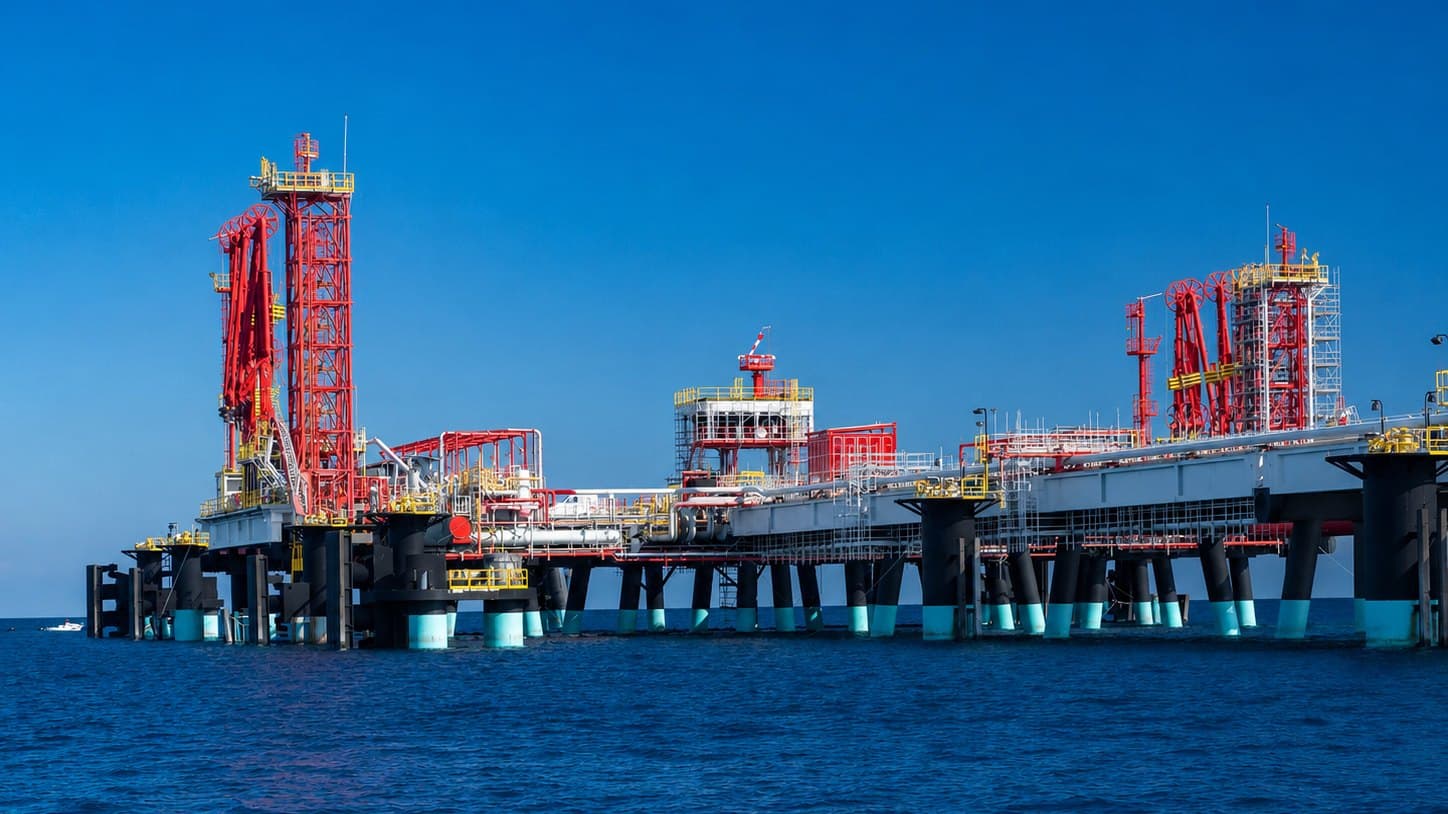
1954
The first settlement
The North Plants are founded under the name SINCAT, Società Industriale Catanese, by the Edison group. The site arrives at Augusta, on the east coast of Sicily, as a petrochemical settlement, in a period when the Italian chemical industry was looking for coastal sites close to the Mediterranean crude routes.
1960
The North comes on stream
The North Plants come on stream. Their position on the commercial port sets the logistics model of the site from the outset, built on sea transport: it will remain the defining trait of the complex in the decades that follow.
1972
ISAB is founded
The South Plants are founded under the original name ISAB, Industria Siciliana Asfalti e Bitumi, within the orbit of the ERG group of the Garrone and Mondini families. The acronym will outlive every change of ownership and become the name of the whole complex.
1975
The second site
The South Plants start up, with a refining capacity of 11 million tonnes. The new site rises a few kilometres from the first, under different ownership, and for almost thirty years the two works will operate separately along the same stretch of coast.
1993
The IGCC project
ERG and Edison Mission Energy set up ISAB Energy, with stakes of 51 and 49 per cent, to build the IGCC plant. The project tackles a problem every refinery knows: where to place the heaviest fractions of the barrel. The answer is to convert them into energy rather than sell them.
1997
Twelve million tonnes
Capacity at the South Plants rises from 11 to 12 million tonnes. The increase follows European demand shifting towards middle distillates and prepares the site for the fuel specifications the Union will introduce in the years that follow.
2000
The IGCC comes on stream
The IGCC comes into operation and begins producing electricity. The refinery takes on a second vocation, and from that moment the residue that closes the processing cycle becomes generating capacity.
2002
The super-site
After several disposals, the last to AGIP, the ERG group acquires the plants and tank farm of the North Plants and joins them to the South Plants: within ERG Raffinerie Mediterranee, Raffineria ISAB is born. This is the step that creates today’s complex and brings together two complementary configurations: at the North Plants catalytic conversion yields mainly gasoline, at the South Plants thermal conversion feeds gas oils.
2008
The company ISAB S.r.l.
ERG Raffinerie Mediterranee transfers all the refinery’s assets to the new ISAB S.r.l. and passes 49% of the capital to LUKOIL Europe Holding. The agreement ties the site to an integrated crude supplier and opens ERG’s gradual exit from refining.
2014
A change of control
Through the put option exercised in stages, LUKOIL reaches 100% of the capital of ISAB S.r.l. The Siracusa complex becomes the Russian group’s main European asset, and its feedstock concentrates progressively on crudes from that source.
2022
The safeguard decree
After the European embargo on Russian crude, the Government adopts a decree providing for temporary administration should operations become impossible. The freeze on bank credit had narrowed supply to a single source, and the loss of that source put the continuity of the works at risk.
2023
Strategic interest
In February a decree of the Italian Prime Minister declares the refinery and the IGCC complex of national strategic interest, placing them among the assets subject to the Italian State’s special powers. In May, GOI Energy takes over the entire capital of ISAB.
2025
Qualified for grid services
The plant obtains qualification for the dispatching services markets. After conversion it can modulate its output on request, and the site adds to its refining role a part in balancing the Italian electricity grid.
2026
Control passes to the Ludoil Group
The Ludoil Group acquires 51% of ISAB and takes sole control. Italy’s largest refining complex returns to Italian ownership and enters the perimeter of a group integrated across the whole chain, from supply to distribution. The stated objective: to build Italy’s largest privately held multi-energy company.
From refinery to energy platform
On 23 July 2026 the plants ran their first charge of vegetable oils. The path leads to a capacity of 500,000 tonnes a year of advanced biofuels by 2030.
HVO / SAF