Skip to content

Italy’s largest refinery, at the centre of the Mediterranean

The ISAB refining complex brings together the South Plants and the North Plants, for a processing capacity of 320,000 barrels a day: around one fifth of Italy’s total.
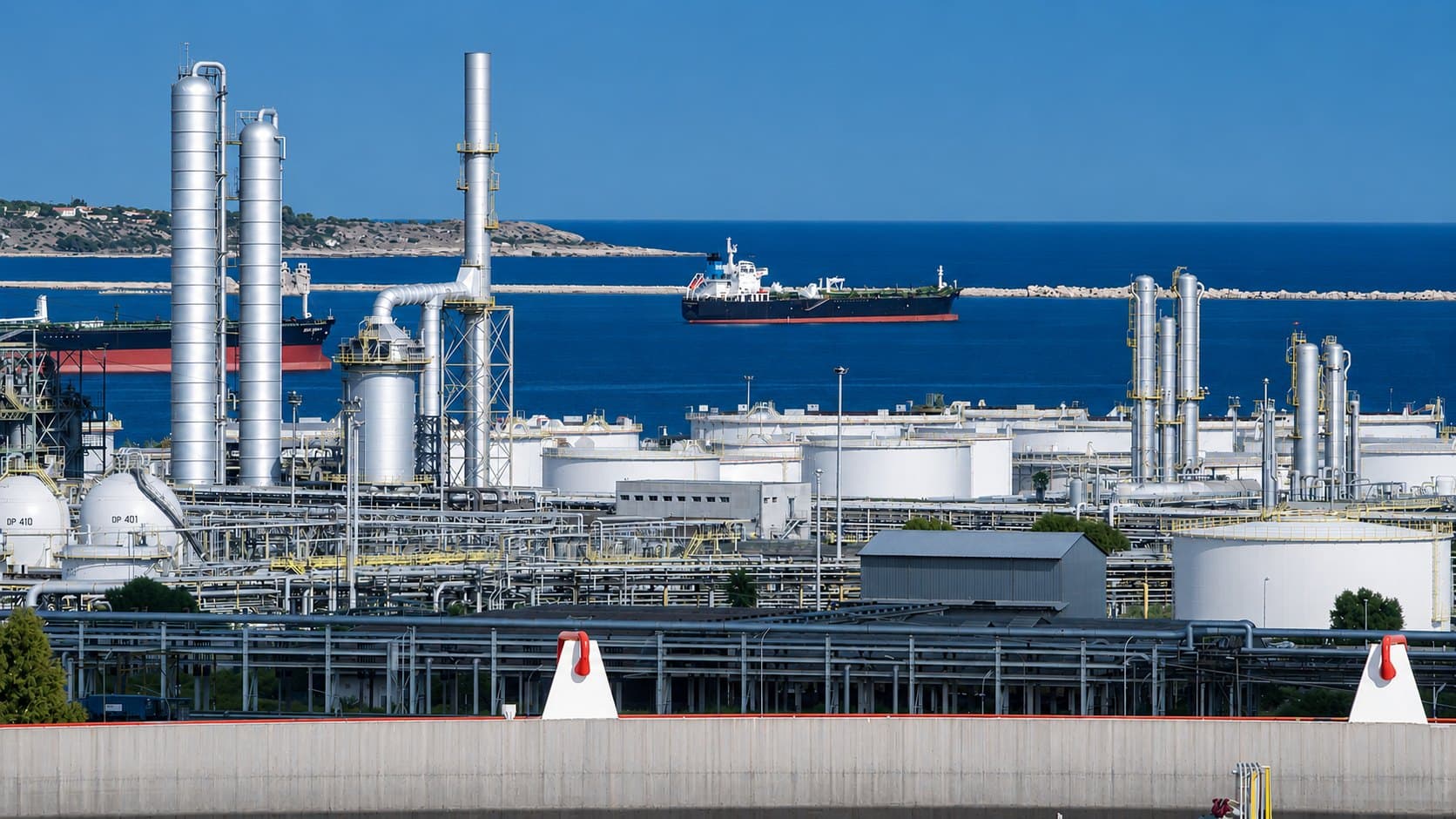
The plants seen from the coast, with a tanker at anchor and refining columns in the foreground.
Site geography

The complex at a glance

The map covers the east coast of Sicily, with the two refining sites and the IGCC plant linked by the pipeline network, and the three jetties that open the site to the sea.

PipelinesNorth PlantsAugustaSouth PlantsPriolo GargalloIGCC532 MWBerthsMediterranean Sea

Select an area of the layout

North Plants

The North Plants are the site’s gasoline production hub. Primary distillation (topping) runs light and medium-heavy crudes; the FCC line comprises catalytic cracking, alkylation and MTBE. The site has two jetties in Augusta Bay.

Operating model

How the site works

From crude to finished products. Five steps describe what the refinery does, every day.

01

Supply

The crude arrives at the jetties and from there, through the pipelines, reaches the tanks. Long-term agreements secure continuity of supply, while the choice of grades to run follows market dynamics.
02

Distillation

The crude is desalted and sent to primary distillation, where heat separates the fractions by boiling point. This yields the intermediates (LPG, virgin naphtha, kerosene, light, medium and heavy gas oils) and the bottom residue.
03

Conversion

The intermediates enter the conversion units, where they become gasoline, gas oils and other products. This is where the two sites differ: at the North Plants catalytic conversion yields mainly gasoline, at the South Plants thermal conversion feeds gas oil production.
04

Storage

Dedicated pipelines carry the converted intermediates to the tank farm, where blending makes up the finished products to the specifications the market requires.
05

Distribution

From the tanks the products return to the jetties and leave by sea for Italian and international markets, or go out by road tanker for local distribution. Gas oils and gasoline are the main share of the volumes.
Capacity and logistics

One fifth of Italy’s refining

What the site accounts for in Italy’s energy system, and how it connects to the sea.

320,000bbl/d

Refining capacity

4,000,000m³

Storage capacity

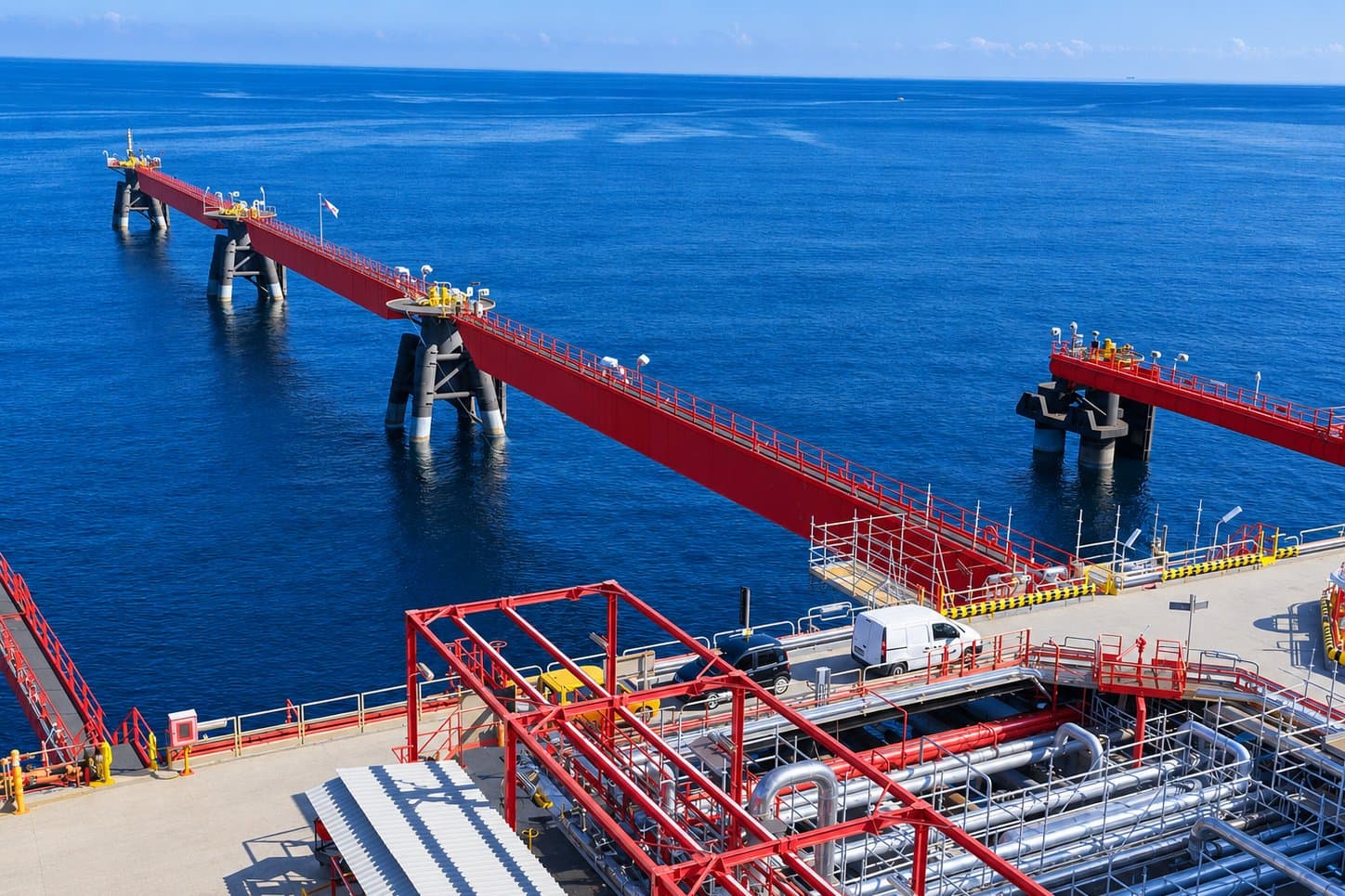
A berth reaching into open sea, seen from above, with loading lines running the length of the structure.
One berth in Santa Panagia Bay serves the South Plants, two in Augusta Bay serve the North Plants. Almost all volumes pass through here, inbound and outbound.
Products

What the refinery produces

Every barrel splits between gas oils, almost half of it, gasoline, just over a quarter, and the remainder in light products, industrial intermediates and recovered streams.

Gas oils

48.9%

Middle distillates for diesel engines and heating, with sulphur content meeting European specifications.

Gasoline

25.7%

Light distillates for spark-ignition engines, formulated to European fuel specifications.

Fuel oil

8.8%

Heavy fraction used as industrial fuel and as marine bunker fuel.

Virgin naphtha

6.7%

Untreated light distillate, for the chemical industry as feedstock and for gasoline production.

Vacuum gas oil

3.4%

Distillate obtained by vacuum distillation of the residue, used as feedstock for the conversion units.

LPG

1.6%

Liquefied propane and butane, for road transport, heating and domestic use.

Benzene

1.6%

Aromatic fraction separated from the refining processes and destined for the chemical industry.

Jet fuel

1.1%

Kerosene for civil aviation, produced to the international specification for aviation turbines. Since 2026 a share of it is co-processed SAF.

Sulphur

0.3%

Recovered from desulphurisation and sold as a raw material to the chemical industry.

Other products

2.0%

Intermediates and minor fractions for further processing or sale as intermediates.

Shares refer to the 2025 financial year and vary with the crude slate processed.
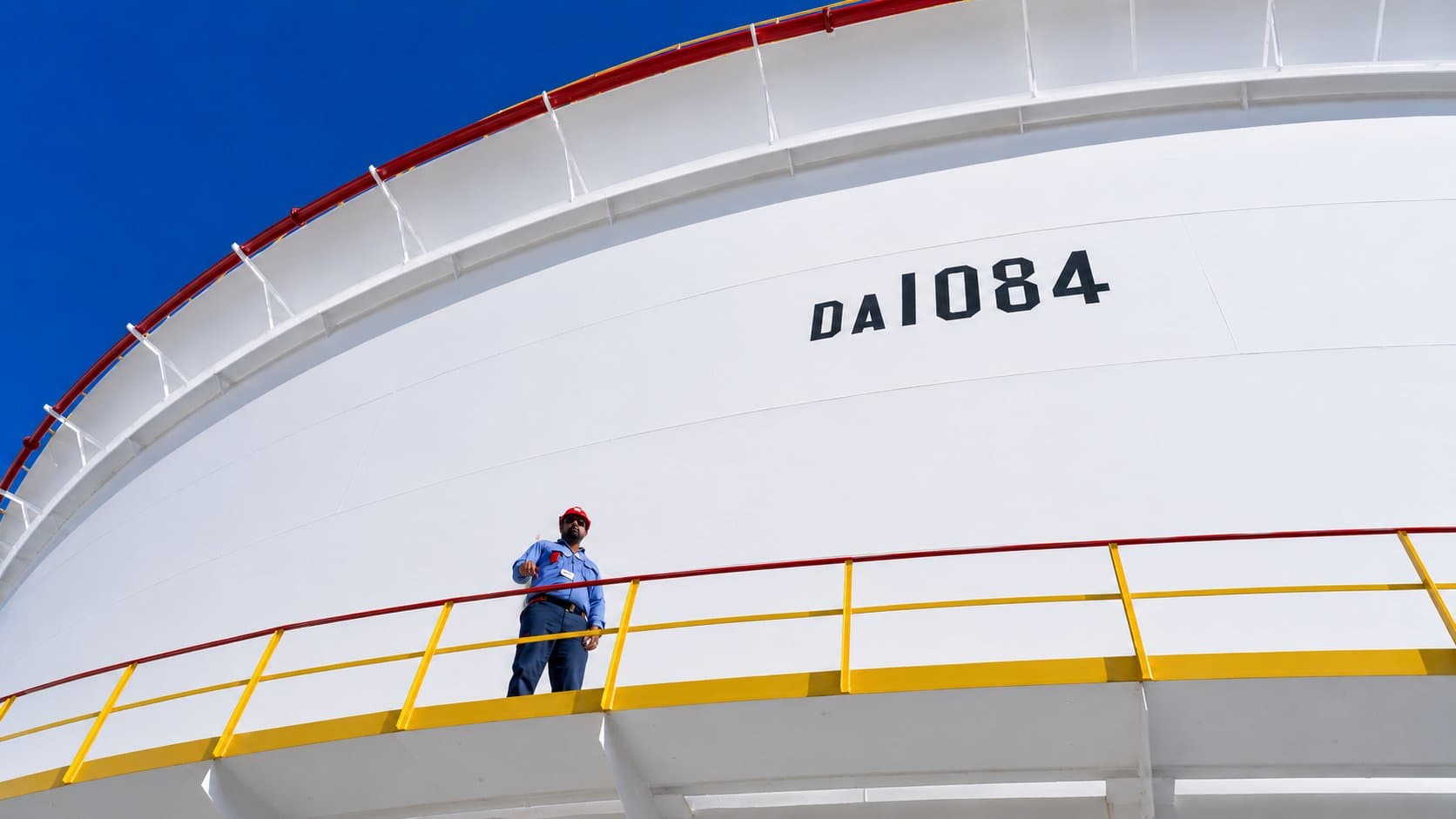
A storage tank seen from below, with an operator on the walkway at mid-height.
Efficiency and the environment

Where efficiency and environmental impact meet

Running a plant well also means making it consume less: every process improvement cuts energy use and emissions together.

01

Emissions

Between 2005 and 2025 the complex’s carbon dioxide emissions fell from 5,878 to 1,921 kilotonnes a year, the IGCC plant included. That is two thirds less in twenty years, achieved through plant investment and revised operating configurations.
02

Energy

Heat recovery and the electrification of processes bring down fuel and water consumption together. Energy management is certified to ISO 50001:2018.
03

Water

Seawater is the main source of cooling and covers the whole requirement of the IGCC plant, which desalinates it for its own units. At the South Plants a significant share of treated effluent returns to the cycle as service or firefighting water.
04

Circularity

Recovered sulphur and the metals concentrated in the gasifier become industrial raw materials; spent catalysts are regenerated; light refinery gases fuel the plants.
IGCC plant

Electricity from refining residues

532 MW of installed capacity from the gasification of heavy refining residues, with a stabilising role for the Italian grid.

Evolution

Renewable fuels from vegetable oils

The 2026–2030 strategic plan opens the way to HVO and SAF, starting from the co-processing unit already certified to ISCC EU and in operation.